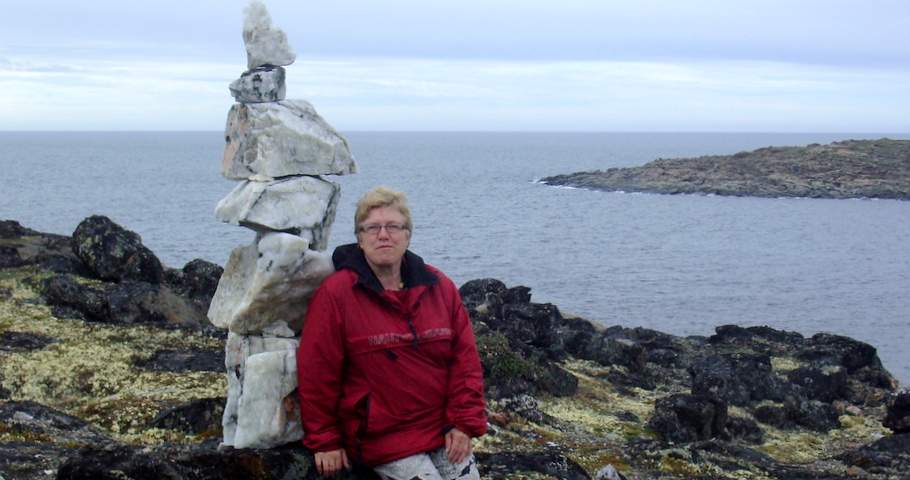
A few weeks ago, I was asked about the differences and similarities between First Nations and Inuit of Canada.
Faced with a daunting list of seemingly unrelated similarities and differences between First Nations and Inuit people, one may feel confused about them.
So, I propose to look at some of the main differences while exposing some of their similarities.
Tuesday, February 14, 2017
Friday, December 23, 2016
The perspective of potentially ruining a child’s outcomes claims my commitment
The point I want to make here is that the perspective of potentially ruining a child’s outcomes claimed my commitment when I was working up North in Nunavik, Quebec, Canada.
It was the hardest work I have ever had to do and you have to have done it to say something like: "On Monday mornings, I put myself in button-responsive mode and I will reflect on what I have done when I leave here for good" (my co-worker's words to me when I complained about never being allowed by supervisor to think things through for the best of the people and the children). No Child Should Take the Long Way Home aims to reduce the number of placements children have to face in Nunavik.
Saturday, October 29, 2016
The assumption that Indigenous people can move on shines light on our heartlessness
Before anyone judges the Inuit of Nunavik, Quebec, Canada, it is important to understand the history behind the issues. We must remember that, as North Americans, our collective ancestry decimated their populations with violence and new diseases.
The turmoil and anguish they had to go through are evident. Yet, they are still not provided the same opportunities we have even though they were "Canadian" even before we were.
Tuesday, October 18, 2016
Self-perpetuating systems ensure the failure of families
On Thanksgiving, there were more Indigenous children in Canada sitting at stranger's tables timidly eating someone's turkey instead of sharing a special time with their own family, be they aunties, uncles and/or grandparents. Canada’s colonial practice of forcibly removing Indigenous children from their families did not end with the closing of Indian residential schools. It continues today in the form of provincial and territorial child welfare systems, which remove Indigenous children and youth at alarmingly high rates.
No Child Should Take the Long Way Home seeks solutions that have been tried by other Canadians to keep apprehended children close to their communities as an alternative to flying them out thousands of kilometers away.
The Honourable Carolyn Bennett, M.D., P.C., M.P., Minister of Indigenous and Northern Affairs says it very well: ''Children are our future, and to give them the best possible start in life, we must collectively move from an intervention-based approach of apprehension and protection to prevention-based approaches to community, families and children's rights and well-being. Working in genuine partnership with First Nations is critical to developing community-led solutions for reform that will reduce the number of children in care and result in better health, education and economic outcomes.''
No Child Should Take the Long Way Home seeks solutions that have been tried by other Canadians to keep apprehended children close to their communities as an alternative to flying them out thousands of kilometers away.
The Honourable Carolyn Bennett, M.D., P.C., M.P., Minister of Indigenous and Northern Affairs says it very well: ''Children are our future, and to give them the best possible start in life, we must collectively move from an intervention-based approach of apprehension and protection to prevention-based approaches to community, families and children's rights and well-being. Working in genuine partnership with First Nations is critical to developing community-led solutions for reform that will reduce the number of children in care and result in better health, education and economic outcomes.''
Thursday, September 22, 2016
Children are issues of concern for all citizens of Canada
Why are there still more First Nations children in care right now than at the height of the residential school system?
Instead of being at home with their parents, brothers, and sisters, tens of thousands of First Nations children are in foster care, staying with distant relatives or living in institutions.
Labels:
Canada,
children,
family law,
foster care,
housing,
Inuit,
mother-blaming culture,
mothers,
No Child Should Take the Long Way Home,
notion of risk,
overcrowding,
petition,
residential schools,
safety
Tuesday, August 23, 2016
The outcome of intercultural placement carries the seeds of alienation from self
Policies and practices reflect longstanding and deeply embedded mother-blaming culture and father invisibility ideologies that shape child protection systems. With regard to children in this year of reconciliation, one has to believe another solution is possible, that whatever solution brought about does not stem from ideology, that big changes are going to happen in this lifetime. Children need to be safe, but they also need to be among their people.
Thursday, August 18, 2016
Everything is changing-the future needs re-arranging
Transcultural placements of Inuit children are more complex than what seems to meet the eye. Children are often placed in non-Inuit families for years and sometimes never return home.
Policies and practices reflect longstanding and deeply embedded mother-blaming culture and father invisibility ideologies that shape child protection systems. This misuse of power attests to our colonization past when it comes to this isolated population.
Subscribe to:
Posts (Atom)